Showing posts with label Electronic Structure and Periodic trends. Show all posts

Thursday, March 10, 2016

Electronic structure and periodic trends exam

This unit was much easier than those of the past as it required less math based questions, and more questions of understanding of the periodic table. This made it much easier to learn the material, and much more enjoyable. The test for this unit wasn't that bad either. I studied the practice tests that we were provided with, which helped a lot. I also used the links provided below for studying. All in all this unit wasn't that bad, and wasn't too hard.


http://www.chemguide.co.uk/atoms/properties/elstructs.html


Places I used to study
http://www.chemguide.co.uk/atoms/properties/elstructs.html

https://www.khanacademy.org/science/chemistry/electronic-structure-of-atoms/orbitals-and-electrons/v/quantum-numbers

http://chemwiki.ucdavis.edu/Core/Inorganic_Chemistry/Electronic_Structure_of_Atoms_and_Molecules/Electronic_Configurations/Basic_Electronic_Structure_of_Atoms

http://chemwiki.ucdavis.edu/Core/Inorganic_Chemistry/Descriptive_Chemistry/Periodic_Trends_of_Elemental_Properties/Periodic_Trends


Monday, March 7, 2016

Rules for placing electrons


  1. Aufbau Principle: electrons enter orbitals of lowest energy first
  1. Pauli Exclusion Principle: an orbital can only contain two electrons with opposite spin
  1. Hund's rule: within a sub level, electrons enter singly before pairing up

The four levels of organization to describe location of electron


  1. Principal energy level: describes in very general terms how far away form the nucleus an electron can be found. It is given the symbol n
  2. Sub level: there are four different sub levels called s, p, d, and f.
    • The first principal energy level has only one sub level called the 1s
    • The second principal energy level has two sub levels called 2s and 2p
    • The third principal energy level has three sub levels called 3s, 3p, and 3d
    • the fourth and all subsequent principal energy levels have four sub levels
       3. Orbitals: The s sub level contains only one orbital, which is shaped like a sphere. The p sub                 level contains three orbitals, which are shaped like dumb-bells and are oriented around the x,                y, and z axis. The d sub level contains five orbitals and the f sub level contains seven orbitals        4. Spin: each orbital can hold two electrons, each with opposite spins. One has an upward spin,                 and the other has a downward spin.

Flame test lab

In this experiment, we used a flame to give atoms energy, and observe the flame color and bright-line spectrum. We then used this data to identify an unknown atom

Here was the procedure

  1. obtain and light a Bunsen burner
  2. using one of the wooden splints in the beaker labeled CaCl2 solution, hold the splint in the flame and observe the color
  3. repeat this for all of the other solutions
Here is a pic  from the lab

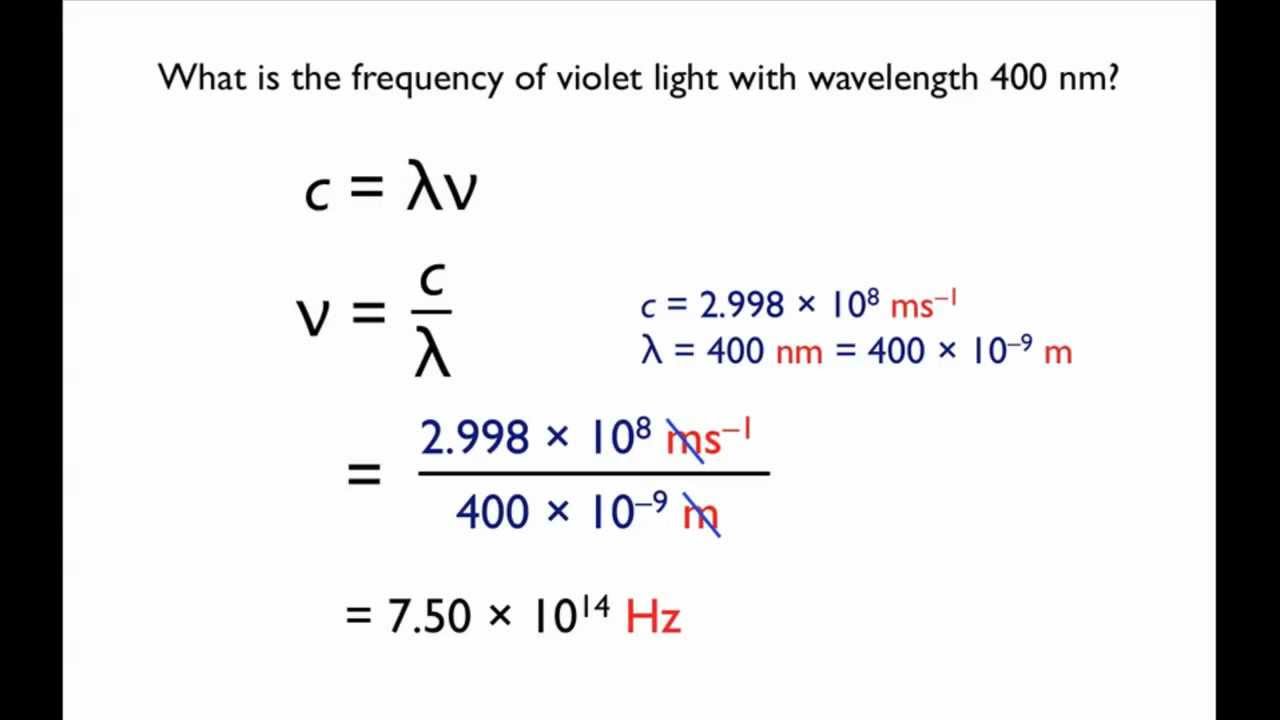
Formulas used to help find wavelength and other values


http://www.1728.org/freqwave.htm
This image here gives us the formula that we use to calculate the frequency, the wavelength, and the energy of these different types of waves

Here are some example problems using these formulas

https://www.youtube.com/watch?v=ln8GK0hamDg

The Wave nature of light


  • The electronic structure of an atom refers to the arrangement of electrons
  • visible light is a form of electromagnetic radiation or radiant energy 
  • radiation carries energy through space
  • electromagnetic radiation is characterized by its wave nature

We can use these waves to identify the frequency, wavelength and the speed of the wave